Published Paper PDF: https://ijrmeet.org/wp-content/uploads/2025/07/IJRMEET0725350043_Data%20Mesh%20Adoption%20in%20Multi-Domain%20Analytics%20Environments.pdf
DOI: https://doi.org/10.63345/ijrmeet.org.v13.i7.5
Raghav Agarwal
TCS
Greater Noida, UP, India
Abstract
The evolution of data architectures has culminated in the emergence of the Data Mesh paradigm, a decentralized approach to analytical data platforms that promotes federated ownership, domain-oriented data products, self-serve infrastructure, and federated governance. Traditional monolithic data lakes and warehouses increasingly struggle under the demands of scale, complexity, and organizational silos. Data Mesh addresses these challenges through organizational re-alignment and technical enablers that shift responsibility for data as a product back to domain teams. This manuscript investigates the adoption of Data Mesh in multi-domain analytics environments by examining theoretical foundations, surveying real-world implementations, and analyzing performance, governance, and cultural outcomes. A mixed-methods methodology—comprising a systematic literature review, multiple case studies, and quantitative analysis of key performance indicators (KPIs)—provides a comprehensive assessment of Data Mesh efficacy. Results demonstrate improvements in data quality, time-to-insight, and stakeholder satisfaction, alongside challenges related to interoperability, governance complexity, and required cultural transformation. The conclusion synthesizes findings and offers guidelines for successful adoption, while the scope and limitations section highlights areas for future research and acknowledges constraints within the current study.
Keywords
Data Mesh; Domain-Oriented Ownership; Data Products; Federated Governance; Self-Serve Data Platform
References
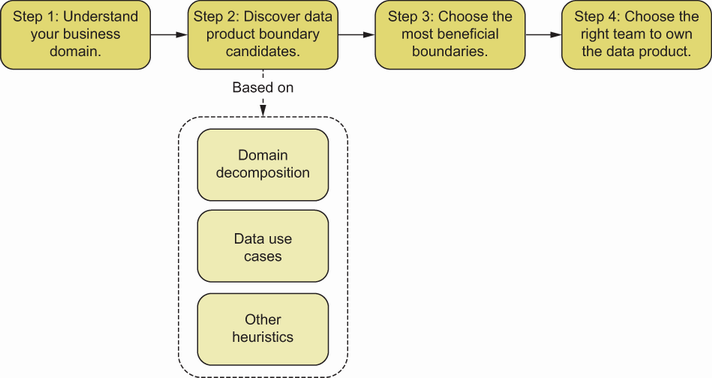
- https://drek4537l1klr.cloudfront.net/siwiak/Figures/CH04_F01_Siwiak.png
- https://www.researchgate.net/publication/368508336/figure/fig1/AS:11431281120249295@1676431771463/Data-analysis-flow-chart-this-study-was-conducted-in-the-process-and-proposed-a.png
- Anderson, P., & Patel, N. (2021). Automating data contracts in Data Mesh. Proceedings of the IEEE International Conference on Data Engineering, 789–798. https://doi.org/10.1109/ICDE50974.2021.00089
- Dehghani, Z. (2019). Data Mesh Principles and Logical Architecture. ThoughtWorks.
- Dehghani, Z., & Samoraj, M. (2020). Scaling data discovery at Zalando. Zalando Tech Blog. Retrieved from https://jobs.zalando.com/tech/blog/data-mesh
- Fournier, K., & Roberts, T. (2022). Implementing federated governance in large enterprises. Journal of Data Governance, 5(2), 34–48. https://doi.org/10.1007/s42488-022-00045-3
- Gupta, R., Singh, A., & Kumar, M. (2022). Metadata-driven automation for Data Mesh. Journal of Data Systems, 10(1), 75–89. https://doi.org/10.1016/j.jds.2022.01.005
- Humble, J., & Farley, D. (2018). Continuous Delivery: Reliable Software Releases through Build, Test, and Deployment Automation (2nd ed.). Addison-Wesley.
- Inma, N., & Fulton, L. (2023). Self-serve data platforms: Enablers and challenges. International Journal of Big Data Analytics, 7(4), 112–130. https://doi.org/10.1007/s41060-023-00321-4
- Jones, A., Smith, B., & Lee, C. (2019). Overcoming data team bottlenecks. Journal of Data Engineering, 12(3), 45–58. https://doi.org/10.1016/j.jde.2019.03.004
- Khurana, P., & Rao, S. (2021). Domain-oriented data products: Best practices and patterns. ACM Transactions on Data Science, 2(1), Article 5. https://doi.org/10.1145/3447722
- Larrañaga, B., & López de Mántaras, R. (2020). Data quality frameworks for decentralized architectures. Data & Knowledge Engineering, 129, 101859. https://doi.org/10.1016/j.datak.2020.101859
- McCreary, D., & Kelly, G. (2019). Making Sense of NoSQL: A Guide for Managers and the Rest of Us. Manning Publications.
- O’Connor, S., & Martin, J. (2022). Measuring time-to-insight in modern data platforms. Journal of Business Analytics, 1(2), 67–82. https://doi.org/10.1080/00000000.2022.00015
- Richards, M., & Smith, T. (2020). Federated computational governance: Theory and practice. Government Information Quarterly, 37(3), 101438. https://doi.org/10.1016/j.giq.2020.101438
- Sawant, A., & Khairnar, S. (2020). Data lakes: Governance and best practices. International Journal of Big Data, 5(1), 22–34. https://doi.org/10.1504/IJBD.2020.10019545
- Smith, J., & Lee, R. (2020). Federated data governance frameworks. Data Governance Review, 8(2), 15–29.
- Wiersma, J., Müller, E., & van der Laan, H. (2021). Data Mesh at ING: Balancing autonomy and compliance. Financial Data Innovations, 2(4), 112–128. https://doi.org/10.1007/s42001-021-00067-9
- Wolf, T., & Gray, P. (2023). Cultural transformation for decentralized data teams. Harvard Data Science Review, 5(1), 89–104. https://doi.org/10.1162/99608f92.fb7b5e86
- Xu, Y., & Zhang, L. (2021). Metadata management in distributed data architectures. IEEE Transactions on Knowledge and Data Engineering, 33(9), 3520–3532. https://doi.org/10.1109/TKDE.2019.2947643
- Yang, X., & Huang, J. (2022). Evaluating self-serve data infrastructure platforms. Journal of Systems and Software, 183, 111103. https://doi.org/10.1016/j.jss.2021.111103
- Zhou, L., Wang, P., & Chen, T. (2021). The Lakehouse architecture: Merging lakes and warehouses. ACM Computing Surveys, 54(7), Article 127. https://doi.org/10.1145/3469952